UNO Wonder
- 4.5
- Rating
- 10.00M
- Installs
- Free
- Price
 Analysis by App-foxy
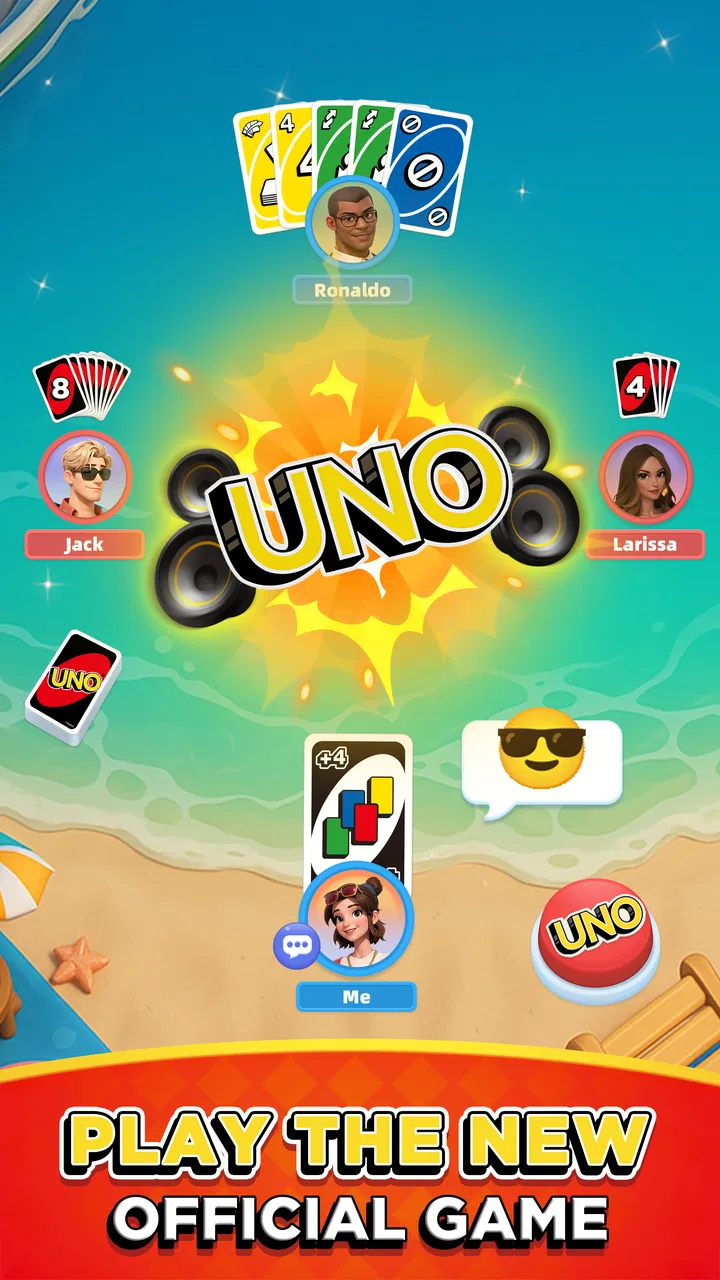
UNO Wonder takes the familiar rhythm of matching colors and numbers and places it inside a more adventurous mobile card-game format. I found it easy to start, but not so simple that every session feels identical. The official UNO rules give it an instantly recognizable foundation, while the surrounding presentation adds a sense of progression and surprise that suits short phone sessions.
It is a free card game from Mattel163 Limited, rated for Everyone, and it has already attracted a broad audience with an average score of 4.6 from around eleven thousand ratings and more than five million installs. Those figures make sense after spending time with it: the basic play is approachable for a family audience, yet the decision-making becomes more interesting when I stop treating every hand as a race to discard cards.
How I approached each session
My usual starting point is deliberately simple. I look at the cards I can play, identify which color gives me the most flexibility, and avoid changing colors without a reason. That sounds obvious, but the mobile format encourages quick taps, especially when a round appears to be going well. Taking a moment before committing a wild or penalty card is one of the easiest ways to avoid turning a comfortable hand into a difficult one.
You May Also Like

 AccuWeather: Weather Radar
AccuWeather Review: A Quick, Clear Forecast for Everyday Decisions
For everyday plans, the best forecast is the one you can understand quickly. AccuWeather makes rain timing, radar, and local conditions easy to act on, with a few trade-offs.

 Hill Climb Racing
Why Hill Climb Racing Still Turns Crashes Into One More Run
A tiny car, a bumpy hill and one more upgrade: Hill Climb Racing keeps resurfacing because its simple chaos makes every near-miss feel personal.

 AliExpress - Shopping App
AliExpress Makes Global Shopping Feel Personal, but Shoppers Bear the Risk
AliExpress turns a global marketplace into a pocket-sized discovery engine. Its reach is useful, its shopping loop compelling, and its trade-offs easy to miss.

 Lords Mobile: Kingdom Wars
Lords Mobile Is a Kingdom-Building Routine, Not a Quick Match
A case-by-case verdict on the building, battles, device demands, and social commitments that make Lords Mobile rewarding for some players and exhausting for others.

 PDF Scanner app - TapScanner
TapScanner Makes Paperwork Easier to Capture, Check, and Share
TapScanner makes scanning with a phone feel less like a rescue operation and more like a dependable step in getting work done. Its capture tools are useful, though not flawless.

 Block Blast!
 Shows How Much a Puzzle Game Can Leave Out
A quiet grid game shows why puzzle players increasingly value instant clarity, repeatable skill and low-pressure play—and where the genre still needs to catch up.
More From Our News Desk
View All News


The adventure framing also changes how I think about a match. I do not approach every round as an isolated game of UNO. I treat early turns as a chance to learn the pace of the current challenge, notice how aggressively opponents respond, and preserve useful cards for the moment when the table becomes more dangerous. That habit is more valuable than simply playing the first legal card I see.
A realistic everyday use case is a short break between errands or during a commute when I have enough attention for a few rounds but not for a long strategy game. The rules are familiar enough that I can return after a day away without relearning a complicated system. At the same time, the adventure structure gives me a reason to continue beyond one casual hand.
For families, that balance is particularly appealing. Someone who already knows physical UNO can understand the basic goal immediately, while a younger player can focus on matching cards and learning when special cards matter. I would still recommend that adults explain spending controls before handing over a device, because the game is free to download but includes optional purchases ranging from $0.99 to $99.99 per item.
The first habits that make a difference
I keep track of the colors left in my hand instead of focusing only on the card I can play now. If I have several cards in one color, keeping that color active can help me reduce my hand efficiently. If my hand is scattered, I prefer a move that preserves multiple future options rather than one that merely removes a single card.
Another useful habit is to treat action cards as timing tools. Playing one immediately can feel satisfying, but holding it may be stronger if the next few turns are uncertain. I especially avoid wasting a flexible card when I still have ordinary moves available. The best choice depends on the hand, yet the general principle is consistent: use flexibility when it solves a problem, not simply because it is available.
When I am close to finishing, I slow down again. The final cards deserve more attention than the opening cards because a single forced color change can leave me stuck. I also make a mental note of which colors I have already used heavily. This is not a complicated tracking system, but it prevents the common mistake of assuming that a card is useful only because it is playable right now.
Settings and phone habits worth checking
Before settling into regular play, I check the device’s sound and notification behavior. Card games can be enjoyable with effects enabled, but they are not always appropriate in a quiet room, at work, or beside someone who is sleeping. Adjusting the phone’s media volume or using a quieter setup makes the experience less intrusive without changing the core game.
I also pay attention to how quickly I tap through prompts. Touch controls are convenient, but a fast tap can select a card before I have properly considered the next move. I found that playing with the phone held securely, rather than tapping one-handed while walking, makes a noticeable difference. The game is casual, but the interface still rewards deliberate input when the hand becomes complicated.
Because the current version is 1.5.1671 and the minimum requirement is Android 5.0, it is accessible to many older Android devices. That broad compatibility is useful for families sharing older phones, although the experience will naturally depend on the device’s screen, responsiveness, and battery condition. I would close other demanding apps before a longer session if the phone is older or already warm.
The age rating of Everyone makes the game easy to consider for a mixed-age household, but that rating should not be confused with a completely hands-off experience. The optional purchase range is the main practical detail I would discuss with children. On a shared device, I would review the store’s purchase protections and make sure the person playing understands that free access and optional spending are separate things.
Playing faster without playing carelessly
Experienced play is less about tapping quickly than reducing hesitation. I try to scan my hand in a fixed order: first playable action cards, then wild options, then ordinary color or number matches. A repeatable scan keeps me from overlooking a strong move when the round speeds up. It also helps me avoid selecting a card simply because it is visually prominent.
I use a second scan before ending my turn. I ask myself whether the chosen color leaves me with another playable card and whether I am giving the next player an easy route. This takes only a moment, but it is especially useful after a wild card. A color that helps me now may also help an opponent, so the best choice is often the one that preserves my next turn while making theirs less comfortable.
When I have several cards of the same color, I do not automatically play the largest-looking group first. I consider whether keeping one card in that color gives me a safer continuation. The aim is to create a sequence of playable turns, not just to reduce the hand by one card. That distinction is easy to miss in a fast mobile match.
Short sessions also benefit from a stopping rule. If I am playing only to fill a few minutes, I prefer finishing a round rather than beginning another one immediately. This keeps the game from expanding into a longer session by accident. For players who enjoy progression, the opposite approach may be better: continue while concentration is high, then stop before rushed decisions turn the experience frustrating.
Where the adventure format helps
The adventure presentation gives the familiar card rules a clearer sense of direction. Instead of relying only on the pleasure of repeated standalone rounds, I have a reason to move forward and see what comes next. That structure is helpful for players who like a light goal around their card games but do not want the complexity of a full strategy title.
It also changes the emotional rhythm. A normal hand can feel disposable, while an adventure-oriented challenge makes me more aware of momentum. I care more about recovering from a bad turn and adapting to what is happening rather than simply restarting at the first setback. That is where the game feels more distinct from playing physical UNO around a table.
Compared with a traditional digital card game built around decks, collections, and long-term optimization, this is much easier to understand. I am not required to study a large card pool before I can enjoy a round. The trade-off is that players seeking deep deck construction, elaborate competitive planning, or a highly technical ruleset may find the experience lighter than they want.
Compared with a basic offline UNO-style app, the adventure framing is more engaging for me because it supplies context between hands. A minimalist alternative may be better if I only want the fastest possible local-style match with no surrounding progression. This game is strongest when I want recognizable card play plus a reason to keep exploring.
Limits that become clearer with experience
The same accessibility that makes the game welcoming can limit its appeal for serious card-game specialists. The core rules are intentionally easy to grasp, so the challenge comes from timing, hand management, and the surrounding adventure flow rather than from a complex strategic engine. I enjoy that focus, but I would not choose it as my main game if I wanted a demanding competitive card battler.
Free access is another point that deserves a realistic look. The absence of an upfront price makes trying it easy, but optional purchases can affect how different players approach progression and convenience. I do not see that as a reason to dismiss the game outright, yet I would decide on a personal spending limit before playing regularly. That is especially important when the phone is shared with children.
There is also a concentration trade-off. The rounds are approachable, but the best decisions require more attention than the bright, casual presentation might suggest. Playing while distracted can lead to wasted action cards, poor color choices, and missed opportunities. If I want something I can operate almost automatically, a simpler puzzle or passive game would suit that moment better.
Players who mainly want face-to-face social interaction may also prefer physical UNO or a dedicated multiplayer alternative designed around direct play with friends. The mobile format is convenient and easy to pick up, but it cannot fully reproduce the conversation, table talk, and shared atmosphere of a real group around a table. I see it as a companion to that experience, not a complete replacement for it.
Who should install it
I would recommend it to someone who already likes UNO and wants more structure than repeatedly starting isolated rounds. It is also a good fit for casual players who want a card game that can be understood immediately but still rewards better timing after several sessions. The Everyone rating and free entry make it approachable for households, provided purchase controls are handled sensibly.
It is less suitable for someone who dislikes progression wrapped around familiar rules, wants a completely offline-feeling card table, or expects advanced deck-building depth. In those cases, a conventional physical game or a more specialized digital card title may be a better match. I would also skip it during moments when I need a game that can be played without any attention, because careless taps matter more than the playful presentation suggests.
The developer, Mattel163 Limited, has kept the recognizable identity of UNO at the center rather than burying it under an unfamiliar system. That matters to me because I can invite a friend or family member to try it without giving them a long explanation. The adventure layer adds motivation, but the basic card language remains the reason the game is immediately comfortable.
My final take after building a routine
After settling into a repeatable routine—check the hand, preserve flexibility, choose colors with the next turn in mind, and slow down near the finish—I found UNO Wonder more satisfying than its simple premise first suggests. It is not trying to replace every kind of card game. Its strength is the middle ground between a familiar family pastime and a structured mobile adventure.
The game is free, approachable, and supported on Android devices starting with version 5.0. Its current version is 1.5.1671, and its strong average rating suggests that the accessible formula has connected with many players. I would still keep the optional purchase range in mind and avoid treating the game’s casual appearance as permission to play without thinking.
My recommendation is straightforward: choose it when you want recognizable UNO rules with a little more journey around them, and skip it when you want deep deck construction or a purely social tabletop replacement. For short breaks, family-friendly sessions, and players who enjoy improving through small repeatable habits, it earns a place on my phone.
FAQs for UNO Wonder
01What platforms is UNO Wonder available on?
UNO Wonder is available on both Android and iOS platforms. You can download the game from the Google Play Store for Android devices and the Apple App Store for iOS devices. Ensure your device meets the minimum system requirements for optimal performance and gameplay experience.
02Does UNO Wonder require an internet connection to play?
UNO Wonder requires an internet connection for most of its features, including online multiplayer and accessing daily challenges. However, it also offers offline mode for single-player matches against AI opponents, allowing you to enjoy the game without internet access.
03Are there any in-app purchases or ads in UNO Wonder?
UNO Wonder includes in-app purchases that allow players to buy additional card packs, themes, and other customizations. Additionally, the game features ads, but players can opt for an ad-free experience through a one-time purchase. This offers flexibility depending on your preference.
04Is UNO Wonder suitable for children?
UNO Wonder is suitable for players of all ages, including children. It features a user-friendly interface and vibrant graphics that appeal to younger audiences. However, parents should be aware of in-app purchases and ensure they have set up parental controls to prevent unauthorized purchases.
05How does UNO Wonder differ from the classic UNO game?
UNO Wonder expands on the classic UNO game by introducing new gameplay modes, special cards, and interactive challenges. Players can enjoy themed events and compete in global leaderboards. These additions enhance the traditional UNO experience, adding depth and variety to the gameplay.
Pros
- Engaging gameplay with vibrant graphics.
- Multiplayer mode supports global competition.
- Frequent updates with new challenges.
- User-friendly interface and easy navigation.
- Interactive tutorials for new players.
Cons
- Occasional connectivity issues in multiplayer.
- In-app purchases can be costly.
- Frequent ads may disrupt gameplay.
- Limited offline functionality available.
- Battery consumption is relatively high.

UNO Wonder
Gallery